You found a winning product. So did fifty other dropshippers, and every one of them is using the exact same supplier photos you are. This is the core challenge: drop shipping product photos are shared by dozens of competing stores.
When the product is identical and the images are identical, the only thing left to compete on is price. That is a race to the bottom that destroys already thin margins.
This guide shows you how to break out of that visual sameness and make your drop shipping product photos stand out, without ever holding the product in your hands.
Why Identical Images Are Quietly Killing Your Store
The dropshipping model has a built-in trap. You import a product, you get the supplier’s three to five stock photos, and so does everyone else selling that item. This is why drop shipping product photos become a competitive liability: everyone’s listing looks identical.
Customers notice. When a shopper sees the same image on your store that they saw on three other stores last week, your credibility drops instantly.
Worse, identical images strip away every reason to choose you besides price. With net margins often sitting at just 15 to 25 percent, a price war is a fast path to losing money.
The Trust Problem
This is not just about looking different. It is about looking trustworthy.
Inconsistent, generic supplier images signal a fly-by-night operation to careful buyers. Research shows 81 percent of consumers say trusting a brand is a deciding factor in whether they buy.
A store that looks like a real brand earns that trust. A store stitched together from mismatched AliExpress photos does not.
The Drop Shipping Product Photos Paradox: Why All Stores Look Identical
Here is the catch nobody mentions. The business model that most needs visual differentiation is the one least equipped to produce it.
You never hold inventory, yet traditional photography requires having the product in hand. These two facts are in direct conflict.
The good news is that you do not need a studio or a sample to stand out. You need a smart editing strategy applied to the images you already have. You can see this challenge broken down in this guide on dropshipping product photography.
Strategy 1: Transform the Supplier Images You Already Have
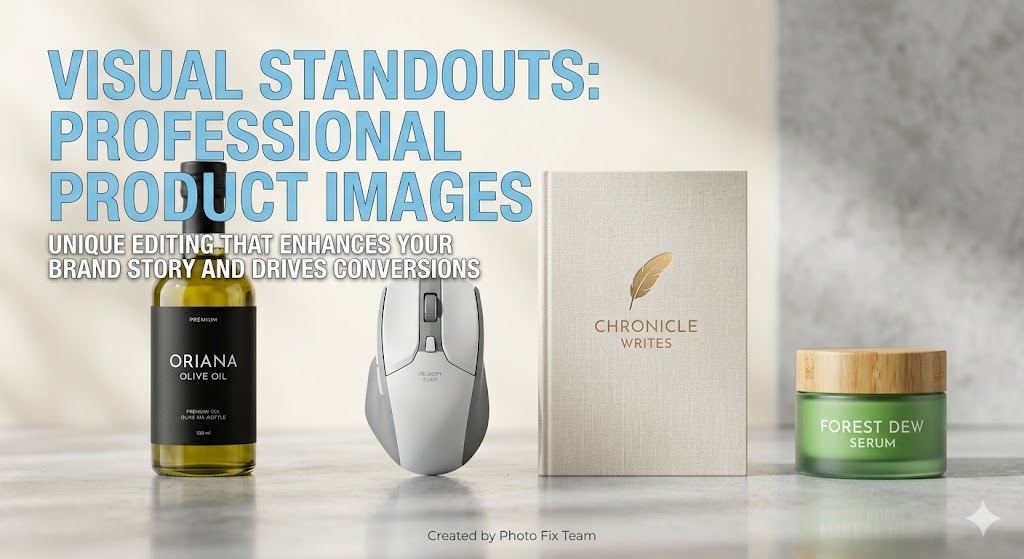
Your fastest win is editing the stock photos into something distinctly yours. Small changes create a surprisingly different feel. The goal is to transform generic drop shipping product photos into branded visuals that feel unique to your store.
Here is what to change on a supplier image to make it your own:
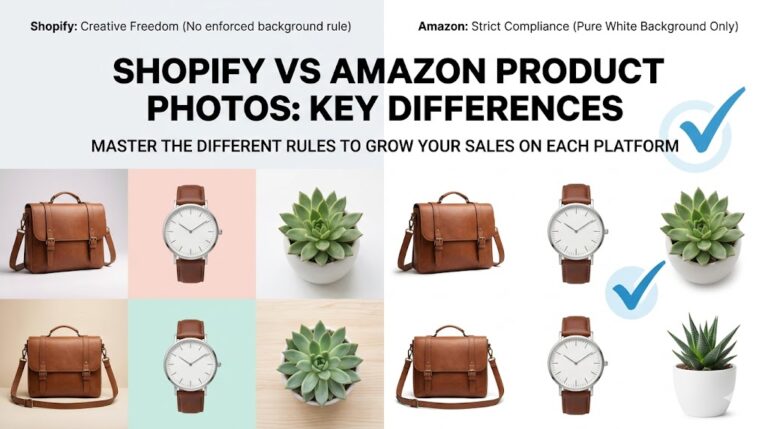
- Swap the background — replace the generic white or cluttered backdrop with a clean, branded one
- Fix the lighting — brighten and even out the harsh shadows common in supplier shots
- Remove foreign text — clear out partially visible Chinese characters or watermark remnants
- Recolor and correct — adjust color so it is accurate and consistent with your brand
- Re-crop for impact — choose an angle and crop that highlights the product’s best feature
These edits cost nothing but effort, yet they instantly separate your listing from competitors using the raw files.
Strategy 2: Build a Consistent Visual Identity
A single edited image helps. A consistent catalog transforms your store into a brand.
The most common dropshipping mistake is a catalog where every product looks like it came from a different store. One white background, one gray with harsh shadows, one cropped AliExpress photo.
Fix this by applying the same editing rules to every product:
- Use one consistent background style across all listings
- Apply the same lighting and color treatment to every image
- Add a signature brand color that repeats throughout your catalog
- Keep cropping, framing, and proportions uniform
A signature color alone can increase brand recognition by up to 80 percent. When you apply consistent branding to your drop shipping product photos, your store immediately looks more professional. Consistency is what turns a pile of random products into something that feels like a real company.
Strategy 3: Add Lifestyle and Scale Context
Supplier photos are shot for catalogs, not conversions. They show the product floating on white with no sense of how it fits into real life.
You can edit context into your images to fill that gap. Place the product in a believable scene, or show it at a scale buyers can understand.
This context answers the silent questions every shopper has. How big is it, how is it used, and would it look good in my life? Images that answer those questions convert better than bare product shots.
Strategy 4: Use Variant and Detail Images Competitors Skip
Most lazy dropshippers upload only the supplier’s main shots. That leaves an easy opening for you.
Build out a fuller gallery than your competitors bother with:
- Clean close-ups that show texture and material quality
- Separate, clear images for each color or size variant
- Annotated detail shots highlighting key features
- A consistent hero image that anchors the listing
A richer, more polished gallery signals effort and quality. It tells the buyer you are a serious seller worth trusting with their money.
Why This Beats Competing on Price
The entire point of differentiating your drop shipping product photos is to escape the price war. When your listing looks better and more trustworthy, you stop competing on the cheapest possible number.
Better visuals earn more clicks, more add-to-carts, and a stronger brand identity. They let you hold your price while competitors undercut each other into the ground.
Only 10 to 20 percent of dropshipping stores stay profitable long-term. Visual differentiation is one of the clearest ways the survivors separate themselves from the rest.
Get a Free Test Image and See the Difference
Editing every supplier photo into a branded, consistent, conversion-ready image takes skill and time, two things most dropshippers running lean simply do not have.
That is exactly what we handle at Photo Fix Team. We take your raw supplier images and transform them into clean, branded, unique product photos that look like they belong to a real company.
See it on your own product. Send us one supplier photo and we will transform it into a standout, branded image, completely free. Claim your Free Test Image here and watch a generic listing turn into a brand.
A Word on Copyright and Supplier Images
Before you edit, make sure you have the right to use the source images. Many suppliers permit resellers to use their photos, but not all do.
When using any third-party images, confirm with the supplier that you are allowed to use and modify them for your store. This protects you from takedowns and disputes down the line.
Editing a licensed image into your own branded version is both safer and more effective than republishing raw files you may not own.
Matching Your Strategy to Your Stage
Your approach should match where your business is. Not every product deserves the same investment.
For new, unproven products, light editing of supplier images is enough to launch quickly and test demand. Swap the background, fix the lighting, and move on.
For proven winners that are driving real revenue, invest in fuller differentiation. Build out lifestyle context, complete variant galleries, and a polished brand look that justifies a premium price.
The most successful dropshipping brands combine both. They launch fast with enhanced supplier images, then develop richer original-looking content for the products that prove themselves.
A Quick Differentiation Checklist
Run every new listing through this before you publish. It ensures you never post raw, generic supplier files again.
- Have you swapped or cleaned the background?
- Is the lighting bright and even?
- Is all foreign text and watermark residue removed?
- Are colors accurate and consistent with your brand?
- Does the gallery include detail and scale context?
- Does this listing match the visual style of the rest of your catalog?
- Do you have permission to use the source images?
If every box is checked, your listing will stand apart from the sea of identical competitors.
Frequently Asked Questions
Can I use supplier images for my dropshipping store?
Often yes, but always confirm with the supplier that you have permission. Many allow resellers to use and edit their photos, but using them raw makes your store look identical to competitors.
How do I make supplier photos look unique?
Edit them. Swap the background, improve the lighting, remove foreign text, correct the color, and add lifestyle context. These changes make a generic image distinctly yours.
Do I need to order product samples to take my own photos?
Not necessarily. You can differentiate effectively by professionally editing the supplier images you already have, which avoids the cost and delay of ordering samples.
Why do my dropshipping listings look the same as competitors?
Because you are likely all using the same supplier stock photos. The fix is editing those images into a consistent, branded look that sets your store apart.
Does image quality really affect dropshipping sales?
Yes. Better, more trustworthy images increase clicks and conversions, and they let you compete on brand instead of being forced into a price war.
Final Word
In dropshipping, your product is not unique, but your images can be. That single difference is often what separates a profitable store from one stuck in a price war.
Edit your supplier photos, build a consistent brand look, and give buyers a reason to trust you over the identical listing next door. When you would rather hand it off and know it is done right, Photo Fix Team is one free test image away.
🚀 Ready to Grow Your eCommerce Business with Professional Clipping Path Services?
Photo Fix Team delivers fast, precise, and affordable clipping path services for eCommerce businesses of all sizes — background removal, white background compliance, ghost mannequin, shadow effects, color correction, and bulk catalog editing with guaranteed quality.
Get a Free Quote Today →