In the fiercely competitive world of online retail, professional ecommerce photo editing is no longer optional — it is the deciding factor between a click that converts and a visitor who bounces. Shoppers cannot touch, feel, or try on what you sell, so the only sales tool you truly have is the image on the screen. When that image is crisp, color-accurate, and clean, trust is built in seconds; when it is dull, cluttered, or inconsistent, your store quietly bleeds revenue. This guide explains exactly why every serious online seller needs ecommerce photo editing, what it actually does for your bottom line, and how to start using it the smart way .
What Is Ecommerce Photo Editing (and Why It Matters)
Ecommerce photo editing is the post-production process of refining product photographs so they meet marketplace standards, match your brand identity, and convince shoppers to buy. It typically includes background removal, clipping path work, color correction, shadow creation, retouching, resizing, and file optimization. Now, with AI-driven search, image-based recommendation engines, and stricter marketplace image rules on Amazon, Walmart, and Shopify, the bar for product images has never been higher.
Buyers now compare dozens of stores in a single tab session. A blurry edge, a grey-tinted white background, or a misaligned shadow tells them — instantly and unconsciously — that your store is amateur. Professional ecommerce photo editing erases those subconscious red flags and replaces them with the polished, trustworthy look that high-converting brands rely on.
7 Reasons Your Ecommerce Store Needs Professional Photo Editing
1. First Impressions Decide Whether Shoppers Stay or Leave
Studies repeatedly show that online shoppers form an opinion about a product page in under three seconds, and that opinion is driven almost entirely by the main image. Professional ecommerce photo editing ensures that your hero image is sharp, evenly lit, and free of distracting flaws so visitors feel they have landed on a legitimate, premium store rather than a hobby project.
2. Higher Conversion Rates and Lower Returns
Accurate color correction and true-to-life retouching reduce one of ecommerce’s biggest profit killers — returns. When shoppers receive the exact product they saw online, complaints drop, reviews improve, and repeat purchase rates climb. Many brands that invest in consistent ecommerce photo editing report measurable lifts in conversion rates within a single quarter.
3. Marketplace Compliance on Amazon, eBay, and Walmart
Every major marketplace enforces strict image rules: pure white backgrounds (RGB 255, 255, 255), minimum resolution, no watermarks, no props on the main image, and a product that fills at least 85% of the frame (see Amazon’s official product image requirements for the latest specs). Professional editors handle these requirements daily and deliver listings that pass first-time review, saving you from suppressed listings and lost Buy Box opportunities.
4. A Consistent, Recognizable Brand Look
Big brands look big partly because every image on their site shares the same lighting, shadow style, crop, and color palette. Consistent ecommerce photo editing gives your store the same cohesive visual identity, which improves brand recall and lets shoppers move from product to product without visual friction.
5. Faster Page Loads and Better SEO
Optimized, properly compressed product images load faster, which Google rewards with better Core Web Vitals scores and higher rankings. Add descriptive alt text and clean file names during the editing workflow, and your product photos start pulling organic traffic from Google Image Search too — a channel most stores ignore.
6. Scalability for Seasonal Catalogs
Launching a new collection or preparing for Black Friday usually means hundreds of fresh SKUs. In-house teams burn out fast; outsourced ecommerce photo editing services scale up overnight, deliver bulk catalogs in 24 hours, and keep quality consistent across every image.
7. Higher-Quality Visuals for Social and Ads
The same edited photos power your Meta Ads, TikTok Shop, Google Shopping, and Pinterest pins. Clean cutouts and color-corrected hero shots make ad creatives easier to produce, raise click-through rates, and lower your overall cost per acquisition.
Core Services Included in Professional Ecommerce Photo Editing
Not every store needs every service, but the following make up the modern ecommerce photo editing toolkit:
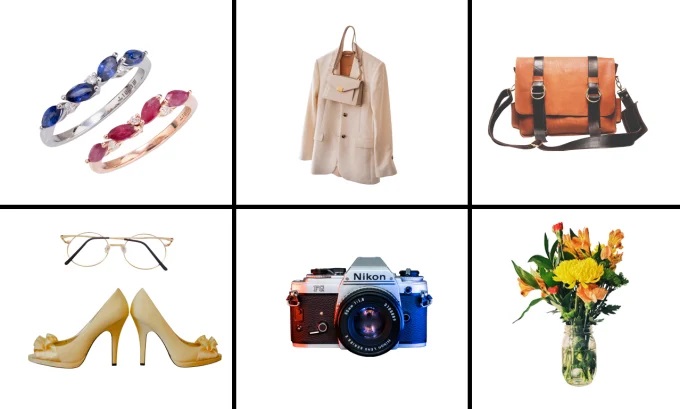
- Background removal & clipping path — pixel-perfect cutouts that drop your product onto a pure white or transparent background.
- Color correction — true-to-life tones so the red dress on screen matches the red dress in the box.
- Shadow creation — natural, drop, or reflection shadows that add depth without distraction.
- Ghost mannequin (neck joint) — invisible mannequin effect for apparel that shows shape without a model.
- Skin and product retouching — removes dust, scratches, wrinkles, and blemishes without making the product look fake.
- Image resizing & cropping — marketplace-ready dimensions for Amazon, Shopify, Etsy, and your own store.
- File optimization — compressed JPG/WebP files that keep quality high and load times low.
In-House vs. Outsourced Ecommerce Photo Editing: Which Wins?
Hiring an in-house editor sounds attractive, but the math rarely works for small and mid-sized stores. A full-time editor costs salary, software licenses, training, equipment, and downtime between projects. Outsourcing your ecommerce photo editing to a specialized studio gives you 24-hour turnaround, predictable per-image pricing, and a team that has already edited millions of products across every category — from jewelry to furniture to apparel.
For a deeper breakdown of how to choose the right provider, read our companion guide: How to Choose the Best Product Photo Editing Service for Your eCommerce Store .
How Much Does Ecommerce Photo Editing Cost?
Pricing depends on complexity. Simple background removal usually starts around $0.25 to $0.50 per image, mid-level retouching ranges from $1 to $3, and advanced jobs like ghost mannequin or multi-clipping-path images can run $3 to $8. The smarter way to think about cost, however, is unit economics: if a $1 edit lifts your conversion rate by even 0.2%, the return on investment is usually 20x or more.
Common Mistakes to Avoid
- Using auto-generated AI cutouts on hair, fur, or transparent products — they leave jagged edges.
- Over-retouching skin or product textures until the photo looks plastic.
- Ignoring color profiles (always export sRGB for web).
- Skipping alt text and descriptive filenames — a missed SEO win.
- Mixing different shadow styles across the same catalog.
Frequently Asked Questions About Ecommerce Photo Editing
How long does professional ecommerce photo editing take?
Most dedicated photo editing studios deliver standard ecommerce photo editing orders within 12 to 24 hours. High-volume seasonal catalogs of 500+ images are typically completed within 24 to 48 hours without sacrificing quality consistency.
Can AI replace professional ecommerce photo editing?
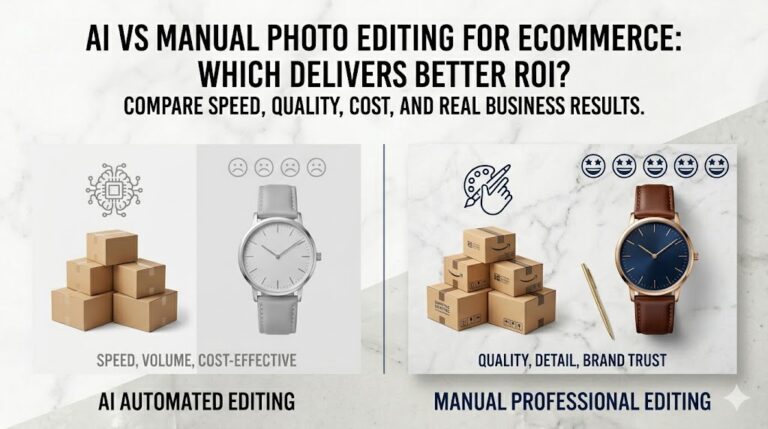
AI tools are useful for quick draft cutouts and casual social graphics, but they still struggle with complex edges like hair, fur, transparent glass, intricate jewelry, and true-to-life color matching. For revenue-driving product listings, trained human retouchers consistently deliver cleaner edges and higher buyer trust.
Is ecommerce photo editing worth the cost for a small online store?
Yes. Small and growing stores often see the highest return on investment because they start from a lower visual baseline. Professionally editing even your top 20–30 hero products immediately elevates brand credibility, lifts click-through rates, and reduces preventable returns.
What file formats and specs are best for ecommerce product photos?
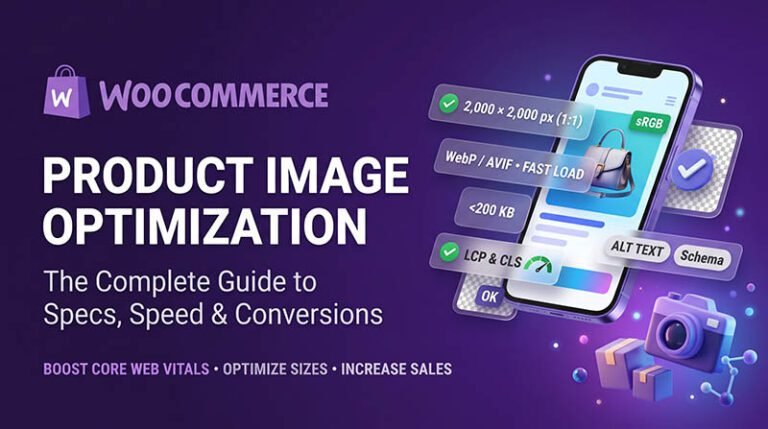
For most online stores and marketplaces, export high-resolution 1,600 to 2,048 px square (1:1) images in the sRGB color profile. Use optimized WebP or compressed JPEG files for Shopify and WooCommerce to maximize page speed, and pure white (RGB 255, 255, 255) JPEGs for Amazon main images.
How much does professional ecommerce photo editing cost per image?
Pricing depends on editing complexity and order volume. Basic background removal and clipping paths generally start around $0.25 to $0.50 per image, standard color correction and retouching range from $1 to $3, and advanced ghost mannequin or multi-path edits typically cost $3 to $8 per image.
How can I test an ecommerce photo editing service before placing a bulk order?
Reputable editing studios offer a free test edit so you can evaluate cutout precision, natural shadows, color accuracy, and turnaround speed on your actual product photos before committing to a full catalog order.
Photo Fix Team delivers fast, pixel-perfect eCommerce photo editing for online stores, brands, and photographers — background removal, ghost mannequin, retouching, color correction, and bulk catalog editing.
✓ 24–48h Turnaround • ✓ 100% Quality Guarantee • ✓ No Credit Card Required