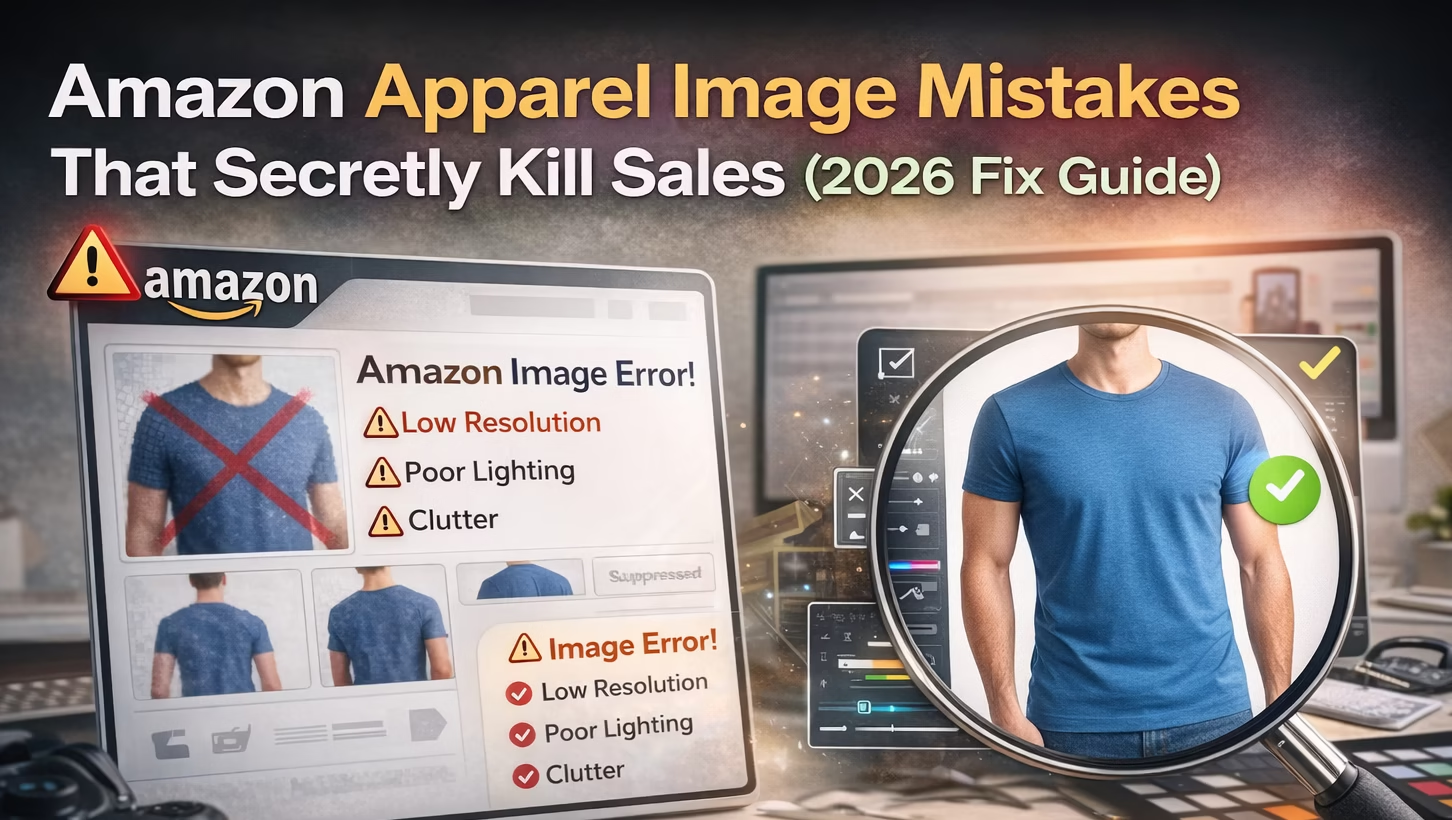
Amazon apparel image mistakes are silently destroying your sales — even when your product is great. If your clothing listings are not converting on Amazon, the problem is almost certainly your images, not your price. In this complete 2026 guide, we break down every critical Amazon apparel image mistake sellers make and show exactly how professional photo editing fixes each one.
Apparel is one of the most competitive and visually demanding categories on Amazon. Buyers cannot touch, feel, or try on your product — so your images do all the selling. When Amazon apparel image mistakes go unnoticed, they erode buyer trust, reduce click-through rates, suppress listings, and cost you real revenue every single day.
Whether you sell t-shirts, dresses, jackets, activewear, or kidswear, this guide covers every image error that could be quietly killing your Amazon apparel sales in 2026. More importantly, it tells you exactly how to fix each one using professional image editing.
Why Amazon Apparel Image Mistakes Cost You More Than You Think
Amazon’s algorithm rewards listings with higher click-through and conversion rates. When your images are poor, buyers scroll past without clicking — and Amazon pushes your listing further down the search results. This creates a compounding problem: bad images lead to fewer clicks, fewer clicks lead to lower organic rank, and lower rank leads to even fewer sales.
Research from Amazon seller studies consistently shows that high-quality, compliant product images can increase conversions by 20–40% compared to low-quality images in the same category. For apparel specifically, where fit, fabric texture, and color accuracy matter enormously, Amazon apparel image mistakes carry an even heavier penalty.
Beyond lost sales, Amazon apparel image mistakes can trigger listing suppression. Amazon actively monitors main images for compliance violations and will suppress non-compliant listings without warning — removing them from search results entirely until the issue is fixed.
Amazon Image Requirements Every Apparel Seller Must Know
Before diving into specific Amazon apparel image mistakes, it is essential to understand the baseline rules that govern all apparel listings. Many sellers violate these requirements without realizing it, which is why understanding them first is critical.
According to Amazon’s official image requirements, all product images must meet the following standards:
- Minimum 1,000 pixels on the longest side to enable the zoom function (1,600–3,000 pixels recommended for best zoom quality).
- Pure white background (RGB 255, 255, 255) on all main product images — not off-white, not grey, not light beige.
- Product must fill at least 85% of the image frame — no excessive white space around the garment.
- No text, logos, badges, borders, or watermarks on the main image.
- No mannequins visible in most apparel categories — use live models or ghost mannequin technique.
- No props or accessories not included with the product.
Every Amazon apparel image mistake described below either directly breaks or undermines one of these core requirements. Understanding the rules makes it much easier to spot and fix the problems in your own listings.
Top 10 Amazon Apparel Image Mistakes to Avoid in 2026
1. Low Resolution Images That Cannot Be Zoomed
One of the most damaging Amazon apparel image mistakes is uploading images under 1,000 pixels on the longest side. Without zoom capability, buyers cannot inspect fabric texture, stitching quality, print detail, or fit — and research shows that shoppers who zoom are significantly more likely to purchase.
Low-resolution apparel images also look pixelated and unprofessional on modern high-DPI screens, including mobile devices where the majority of Amazon shopping now happens. This single Amazon apparel image mistake can quietly reduce conversions by 15–25%.
How professional editing fixes it: Start with original high-quality RAW or JPEG files from a professional photoshoot. Export images at 1,600–3,000 pixels on the longest side. Apply precision sharpening to enhance fabric detail. Compress properly using lossless or near-lossless settings to maintain quality while reducing file size.
2. Background Is Not True Pure White
This is one of the most common and costly Amazon apparel image mistakes. Many sellers photograph garments against a white wall, white foam board, or white backdrop and assume the background qualifies. It almost never does.
Off-white, grey-tinted, or uneven backgrounds fail Amazon’s requirement for RGB 255, 255, 255 pure white. This violation triggers automatic listing suppression in many apparel categories. Even subtle color casts from lighting can make a background appear off-white on screen, even if it looked white in the studio.
How professional editing fixes it: A professional photo editor uses precise clipping paths to isolate the garment, removes all background pixels, and replaces the background with true RGB 255, 255, 255 white. Edge cleaning removes halos and fringing. A subtle natural drop shadow is added for realism without violating Amazon’s background rule.
3. Product Does Not Fill Enough of the Frame
Amazon requires the apparel product to fill at least 85% of the image frame. Poor framing — where the garment appears small against a large white background — reduces perceived value and makes the product look less premium than competitors whose images are properly framed.
The opposite Amazon apparel image mistake — cropping too tightly so parts of the garment are cut off — is equally harmful. Buyers need to see the complete product, including hem details, cuffs, collar, and any design elements near the edges.
How professional editing fixes it: Precise canvas resizing and repositioning ensures the garment fills 85–90% of the frame while remaining fully visible and symmetrically placed. Consistency across all size and color variants is maintained through batch editing.
4. Using Visible Mannequins Where They Are Not Allowed
In most Amazon apparel categories, visible mannequins are prohibited on main product images. This is one of the Amazon apparel image mistakes that sellers discover the hard way when their listing gets suppressed.
Garments on visible mannequins look rigid and lifeless compared to ghost mannequin images or live model photos. They also violate Amazon’s requirements in most clothing categories, making them both an aesthetic problem and a compliance problem.
How professional editing fixes it: Ghost mannequin retouching (also called the invisible mannequin technique or neck joint technique) removes the mannequin from the image while preserving the three-dimensional shape of the garment. The result is a clean, professional image that shows the garment as if worn by an invisible model — fully compliant with Amazon’s apparel image guidelines.
5. Over-Retouched or Unrealistic Product Images
Over-editing is one of the most dangerous Amazon apparel image mistakes because it creates a mismatch between what buyers see and what they receive. When images are excessively smoothed, colors are altered beyond reality, or fabric textures are erased in post-processing, buyers feel deceived when the actual product arrives.
This leads directly to higher return rates, negative reviews, and potential account health issues. Amazon’s policies require that images accurately represent the product — over-retouching that misrepresents the item is a policy violation that can result in account warnings.
How professional editing fixes it: Skilled retouchers remove wrinkles, distracting threads, lint, and environmental reflections while preserving the authentic fabric texture, natural folds, stitching detail, and true material appearance. The goal is a clean, polished image — not a fabricated one.
6. Inaccurate Colors and Inconsistent Variants
Color accuracy is critical for apparel. When a buyer orders a navy blue hoodie and receives something that looks closer to black or dark grey, they return it. Color-related returns are one of the biggest drivers of negative feedback in the Amazon apparel category — and they almost always trace back to Amazon apparel image mistakes in color representation.
Inconsistency across color variants is equally damaging. When the red variant looks vibrant in its listing image but the green variant looks dull and washed out, buyers lose confidence in the brand and abandon the purchase.
How professional editing fixes it: Color correction is performed against physical reference samples using calibrated monitors. Batch processing ensures all variants — every size and every color — are visually consistent, accurately represent the product, and meet the same quality standard.
7. Too Few Images or a Poor Secondary Image Strategy
Amazon allows up to nine images per listing. Sellers who upload only two or three images leave enormous conversion potential on the table. This is one of the most overlooked Amazon apparel image mistakes — not a compliance violation, but a strategic failure that hurts sales just as much.
Buyers need to see every angle of the garment before they feel confident enough to purchase. Without comprehensive imagery, they go to a competitor who provides more visual information.
How professional editing fixes it: A complete strategic image set for Amazon apparel includes: (1) front view on ghost mannequin or model — main image, (2) back view, (3) side or three-quarter view, (4) close-up of fabric texture and stitching, (5) detail shots of unique features like zippers, buttons, or prints, (6) size chart or fit guide, (7) lifestyle image showing the garment in context, (8) color variant comparison, and (9) packaging or care label if relevant.
8. Text, Graphics, or Badges on the Main Image
Adding text overlays, promotional badges, size callouts, or brand logos to the main product image is a direct violation of Amazon’s image policy. This Amazon apparel image mistake is surprisingly common among new sellers who import from other platforms where text overlays are standard practice.
Text on the main image will trigger suppression. Amazon’s automated systems are effective at detecting text overlays, and listings violating this rule are regularly removed from search results.
How professional editing fixes it: All text and graphic elements are removed from the main image. The information is then professionally redesigned into compliant secondary images — clean infographics, size charts, and feature callout images that communicate product value without violating main image rules.
9. Poor Lighting, Flat Shadows, or Incorrect Exposure
Bad lighting is one of the Amazon apparel image mistakes that makes listings look instantly cheap and untrustworthy. Flat lighting hides fabric texture and dimension. Harsh lighting creates blown-out highlights that erase important detail. Inconsistent color temperature across images makes a listing look unprofessional.
Apparel listings with poor lighting are consistently outperformed by competitors whose images show clean, even illumination that flatters the garment and accurately reveals its texture and construction quality.
How professional editing fixes it: Exposure correction, highlight recovery, shadow balancing, and color temperature normalization are applied in post-processing. Realistic ground shadows are added or refined to give the garment natural visual weight without cluttering the clean white background.
10. Category-Specific Violations for Apparel Subcategories
Amazon has specific image rules for different apparel subcategories that go beyond general image requirements. Using sitting poses for certain categories, including accessories not sold with the product, showing multiple garments when only one is included, or using suggestive angles can all trigger suppression in specific subcategories.
These category-specific Amazon apparel image mistakes require familiarity with Amazon’s full apparel image style guide — a document that is regularly updated and that many sellers never read in full.
How professional editing fixes it: Selective cropping removes non-included items from images. Reframing and repositioning ensure images comply with subcategory-specific rules. Working with editors who specialize in Amazon-compliant image editing services ensures your images meet every current requirement.
How Amazon Apparel Image Mistakes Silently Impact Your Sales Metrics
Understanding the cumulative damage of Amazon apparel image mistakes helps explain why fixing images should be your first priority — before adjusting ads, pricing, or keywords.
Poor images reduce click-through rate (CTR) because your listing looks less appealing than competitors in search results. Lower CTR signals to Amazon’s algorithm that your product is less relevant, causing rank to decline. Lower rank means fewer impressions, which compounds the original problem.
For buyers who do click, low-quality or inaccurate images reduce conversion rate because they cannot see enough product detail to feel confident purchasing. They leave and buy from a competitor with better images — further damaging your conversion metrics.
When buyers do purchase despite poor images, mismatch between image and reality drives returns and negative reviews. High return rates and bad reviews further suppress your listing and damage brand reputation — creating a cycle that is very difficult to break without fixing the underlying image quality problem.
Why Professional Photo Editing is the Complete Fix for Amazon Apparel Image Mistakes
Many Amazon sellers try to fix Amazon apparel image mistakes themselves using consumer editing tools. While basic adjustments are possible, achieving the standard required for competitive Amazon apparel listings — especially at scale — requires professional expertise.
Professional Amazon apparel photo editing services provide: consistent quality across every image in your catalog, technical compliance with all current Amazon image requirements, accurate color representation matched to physical samples, ghost mannequin and neck-joint retouching that looks natural, and fast turnaround that allows rapid catalog updates.
The ROI on professional image editing is straightforward. If fixing your images increases your conversion rate by even 10%, and you sell 100 units per month at $30, that is $300 in additional monthly revenue — typically far exceeding the cost of professional editing in the first month alone.
AI vs Human Editing for Amazon Apparel Image Mistakes
AI-powered editing tools have improved significantly in recent years. For basic background removal on simple product shots, AI tools can perform adequately at high speed. However, for Amazon apparel listings — where fabric edges are complex, ghost mannequin technique requires human judgment, and color accuracy must match physical samples — AI tools consistently fall short.
The most effective approach for serious Amazon apparel sellers is a hybrid workflow: AI tools handle bulk background removal and initial cleanup, while human professional editors handle final quality control, color correction, ghost mannequin retouching, and compliance verification. This combines speed with the quality standards that actually move products in competitive Amazon apparel categories.
Amazon Apparel Image Mistakes Checklist: Before You Upload
Use this checklist to verify every image before uploading to Amazon. Addressing these Amazon apparel image mistakes before listing saves time, avoids suppression, and protects your conversion rate from day one.
- ✓ Image is minimum 1,000 pixels on longest side (1,600–3,000 px recommended)
- ✓ Main image background is pure white RGB 255, 255, 255
- ✓ Product fills at least 85% of the image frame
- ✓ No text, logos, badges, or watermarks on the main image
- ✓ No visible mannequin (ghost mannequin or live model used)
- ✓ Colors are accurate and match the physical product
- ✓ All color variants are consistent in quality and framing
- ✓ At least 6–9 images uploaded per listing
- ✓ Secondary images include back view, detail shots, and lifestyle images
- ✓ No non-included accessories or props visible
- ✓ Images comply with subcategory-specific rules
- ✓ File is JPEG, under 10MB, sRGB color profile
Final Verdict: Fix Your Amazon Apparel Image Mistakes and Grow Sales in 2026
Amazon apparel image mistakes are not minor technical details — they are the primary reason most apparel listings fail to reach their conversion potential. In 2026, as Amazon apparel competition continues to intensify, sellers who maintain compliant, high-quality product images will consistently outperform those who do not.
If your listings are not converting at the rate your product deserves, start with a honest audit of your images against the checklist above. Fix every Amazon apparel image mistake you find — background quality, resolution, framing, color accuracy, ghost mannequin technique, and secondary image strategy — and measure the impact on your conversion rate, return rate, and organic rank.
The investment in professional image editing pays for itself quickly. Images are not decoration on Amazon — they are your most important selling tool. Fixing apparel image mistakes with professional editing is one of the highest-ROI actions any Amazon apparel seller can take in 2026.
🚀 Ready to Grow Your eCommerce Business with Professional Clipping Path Services?
Photo Fix Team delivers fast, precise, and affordable clipping path services for eCommerce businesses of all sizes — background removal, white background compliance, ghost mannequin, shadow effects, color correction, and bulk catalog editing with guaranteed quality.
Get a Free Quote Today →