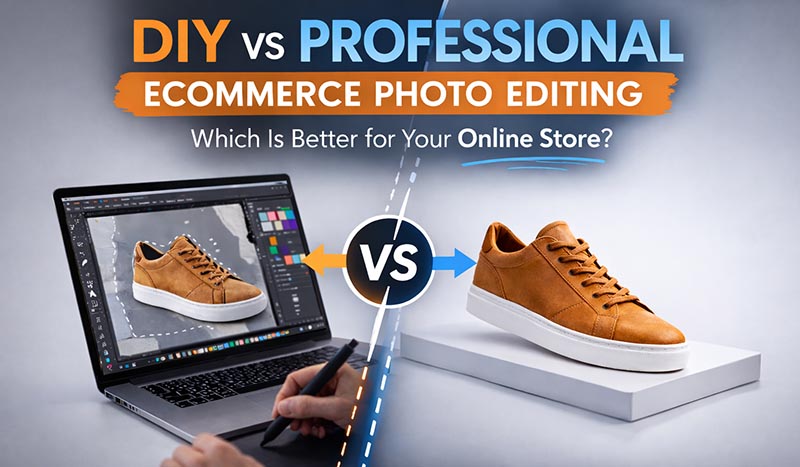
If you run an online store, product images are not just visual assets. They are part of your sales process. They shape first impressions, influence trust, and help customers decide whether your product feels worth the price. That is why the choice between DIY vs professional ecommerce photo editing matters more than many sellers realize.
At first glance, DIY editing looks like the cheaper option. You keep control, avoid outsourcing, and handle images in-house. But as your catalog grows, the real costs of DIY often show up in time, inconsistency, slower launches, and lower-quality visuals. On the other hand, professional editing can improve quality and speed, but only if it fits your workflow and budget.
This guide breaks down the real difference between DIY and professional ecommerce photo editing, including cost, quality, scalability, and which option makes the most sense for different types of stores. We will also look at when a hybrid approach is the smartest move.
What DIY and Professional Ecommerce Photo Editing Really Mean
Before comparing the two, it helps to define them clearly.
DIY product photo editing
DIY product photo editing means you or your internal team handle editing on your own using tools like Photoshop, Lightroom, Canva, or other editing apps. This usually includes tasks like:
- background removal
- brightness and contrast correction
- color correction
- cropping and resizing
- minor retouching
- export optimization for web
DIY works best when you have a manageable number of products and enough time to keep image quality consistent.
Professional ecommerce photo editing
Professional editing means outsourcing the work to specialists who edit product images for ecommerce brands, photographers, or agencies. These services often include:
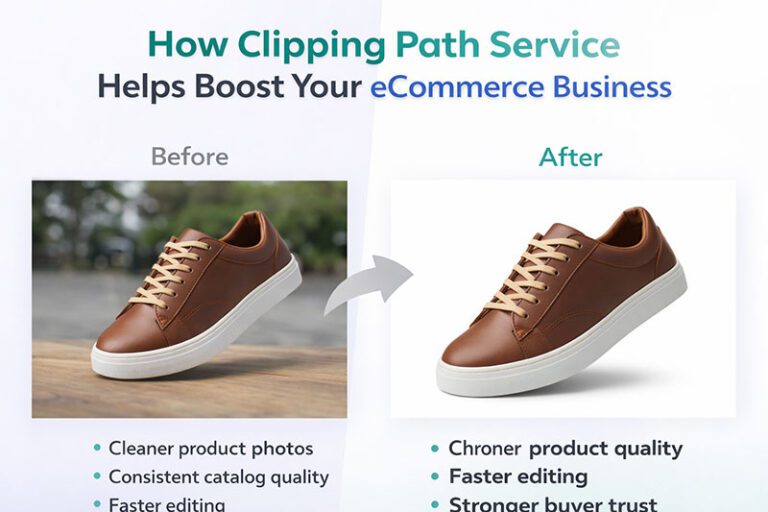
- clean background removal
- accurate clipping paths
- advanced retouching
- ghost mannequin editing
- shadow creation
- color matching
- consistent catalog formatting
- platform-ready exports for Amazon, Shopify, Etsy, and more
Professional services are designed for stores that need speed, quality control, and consistent results across many products.
DIY vs Professional Ecommerce Photo Editing: Quick Comparison
Here is a simple side-by-side breakdown.
| Factor | DIY Editing | Professional Editing |
|---|---|---|
| Upfront cost | Lower | Higher per image or batch |
| Time required | High | Low for your team |
| Learning curve | High | Minimal on your side |
| Quality consistency | Varies by skill | Usually more consistent |
| Scalability | Limited | Better for large catalogs |
| Speed for bulk work | Slower | Faster turnaround |
| Advanced editing | Often difficult | Usually available |
| Platform compliance | Depends on your knowledge | Often built into workflow |
The best choice depends on where your business is right now, not just what seems cheaper today.
Benefits of DIY Product Photo Editing
DIY editing has clear advantages, especially for smaller stores or newer brands.
1. Lower immediate cost
If you are just starting out, DIY editing can help you avoid outsourcing costs. You may already have access to editing software, or you can use beginner-friendly tools at a lower price point.
This can be useful when:
- you are testing a new product line
- your store has a small catalog
- margins are tight
- you want to validate demand before investing more
2. Full creative control
DIY editing gives you direct control over how your product images look. You can make changes quickly, test visual styles, and adjust images based on brand preferences.
This is helpful for:
- niche brands with a specific look
- founders who are detail-focused
- stores running frequent experiments on product pages
3. Faster edits for very small batches
If you only have a few products, editing them yourself may actually be faster than preparing files for an external team.
For example, if you launch five handmade items per month, a basic internal workflow may be enough.
4. Better understanding of your visual standards
Handling your own edits can teach you what good product presentation requires. That knowledge is valuable even if you outsource later.
The Hidden Limitations of DIY Editing for Growing Stores
DIY sounds affordable, but it becomes harder to manage as the business grows.
1. Time costs add up quickly
Editing is rarely just a quick fix. Even simple ecommerce image retouching can take time when done correctly.
A typical workflow might include:
- selecting the best image
- cleaning the background
- correcting color
- retouching dust or flaws
- creating a consistent crop
- exporting different sizes
- checking quality
Multiply that by dozens or hundreds of products, and DIY editing starts taking time away from marketing, customer service, product sourcing, and growth.
2. Quality often becomes inconsistent
One of the biggest issues with DIY product photo editing is inconsistency. Different lighting setups, editing habits, or team members can make your catalog look uneven.
That inconsistency may show up in:
- background shades
- shadow style
- color temperature
- crop alignment
- product scale in thumbnails
Shoppers notice this more than many sellers expect, especially on collection pages.
3. Advanced editing is hard to do well
Basic edits are manageable. But complex product types need more skill.
Examples include:
- jewelry with reflections
- clothing that needs ghost mannequin work
- transparent or glossy items
- hair, fur, lace, or fabric edges
- image composites and shadow corrections
These edits require precision. Poor results make the product look cheap or inaccurate.
4. DIY can slow your store’s growth
As your SKU count increases, DIY becomes a bottleneck. Launches take longer. Seasonal updates get delayed. Marketplace listings may go live later than planned.
What looked cost-effective at first can become expensive when it slows sales.
Benefits of Professional Ecommerce Photo Editing
Professional editing is not only about making images look better. It also supports efficiency, consistency, and conversion-focused presentation.
1. Better image quality
A professional team brings experience, process, and quality control. That usually leads to cleaner cutouts, more accurate color correction, and better overall presentation.
This matters because product visuals affect trust. Research from Baymard continues to show how product page experience influences user decision-making.
2. Consistency across your catalog
Professional product photo editing services usually follow a standardized workflow. That helps keep your backgrounds, shadows, dimensions, and colors aligned across product categories.
Consistency improves:
- brand presentation
- browsing experience
- catalog professionalism
- trust in product quality
3. Faster turnaround for larger volumes
If you add products regularly, outsource catalog updates, or manage seasonal collections, a professional editing partner can process bulk work much faster than a small internal team.
This is especially useful for:
- fashion brands
- Amazon sellers
- Shopify stores with large catalogs
- agencies handling multiple clients
- product photographers with high volume
4. Better platform readiness
Different platforms have different expectations. Amazon main images, Shopify galleries, Etsy thumbnails, and brand websites often need different crops, backgrounds, or formatting.
Professional editors are more likely to understand these requirements and prepare files accordingly. Photo Fix Team’s platform-focused pages already position editing around Amazon, Shopify, Etsy, eBay, Walmart, and WooCommerce needs.
5. More time for higher-value work
When you stop spending hours editing product images, your team can focus on work that drives growth, such as:
- SEO
- product page optimization
- paid ads
- email marketing
- customer support
- supplier communication
That time shift often creates more value than the editing cost itself.
When DIY Makes Sense
DIY is still a valid option in the right situation.
It usually makes sense when:
- you have a very small product catalog
- your budget is limited
- you only need simple edits
- your product launch schedule is flexible
- you already have editing skills in-house
- your images are mostly used for early testing
DIY can work well for new sellers, handmade product shops, or brands that are still validating their product-market fit.
When Professional Editing Is the Better Investment
Professional editing is often the better choice when:
- you upload products regularly
- you need consistent, polished visuals
- your team is overloaded
- your products require advanced retouching
- you sell on marketplaces with strict image rules
- you want to scale without sacrificing quality
It is also a strong choice when product images directly affect buying confidence, such as in fashion, beauty, jewelry, furniture, and premium consumer goods.
High-quality imagery is closely tied to how customers evaluate products online, and Shopify’s product photography guidance reinforces the importance of clear, strong visuals for ecommerce performance.
The Smartest Option for Many Brands: A Hybrid Workflow
For many ecommerce businesses, the answer is not fully DIY or fully outsourced. It is a hybrid model.
What a hybrid workflow looks like
Your team handles:
- basic photo capture
- file naming
- initial selection
- simple resizing
- internal approvals
A professional editing service handles:
- background removal
- retouching
- shadow creation
- ghost mannequin edits
- color matching
- bulk final exports
This gives you control without overwhelming your internal workflow.
Why hybrid works well
A hybrid model can:
- reduce editing bottlenecks
- keep costs manageable
- improve image quality
- speed up launches
- maintain consistency across product lines
For brands that are growing but not yet enterprise-sized, this is often the most efficient setup.
How to Choose the Right Editing Approach for Your Store
Ask these questions before deciding.
1. How many product images do you handle per month?
If the number is low, DIY may be fine. If the number is growing fast, outsourcing becomes more practical.
2. How important is visual consistency to your brand?
If your store depends on premium presentation, consistency is not optional.
3. Do you have editing skills in-house?
If not, the learning curve may cost more than outsourcing.
4. Are your products easy or difficult to edit?
Simple hard-edged products are easier to manage in-house. Apparel, jewelry, and transparent products usually need more expertise.
5. What is your real cost of time?
If editing steals hours from marketing or operations, DIY may not be the cheaper option.
6. Do your images need to meet marketplace standards?
If yes, professional editing can reduce errors and rework.
Practical Decision Guide
Use this quick rule of thumb:
Choose DIY if:
- you are a beginner seller
- you have fewer products
- your edits are simple
- budget is the main concern
- you have time to learn and execute
Choose professional editing if:
- you need better consistency
- you want faster scaling
- your team is short on time
- your products need precision edits
- you care about stronger visual branding and conversion readiness
Choose hybrid if:
- you want a balance of control and efficiency
- you have some internal capacity but not enough for everything
- you need pro-level finishing without outsourcing the entire process
Final Verdict on DIY vs Professional Ecommerce Photo Editing
The debate around DIY vs professional ecommerce photo editing is not really about which option is universally better. It is about which option supports your current business stage, catalog size, and growth goals.
DIY editing can work well for smaller stores with simple needs and tight budgets. But as your product count grows, the limits of DIY usually become more obvious. Quality becomes inconsistent, edits take too long, and launches slow down. Professional ecommerce photo editing solves those problems by giving you cleaner results, stronger consistency, and more time to focus on selling.
If your product images are starting to hold back growth, outsourcing is no longer just a design choice. It becomes an operational advantage.
At Photo Fix Team, we help ecommerce brands, online sellers, and product photographers turn raw product photos into clean, consistent, marketplace-ready visuals. If you are weighing DIY vs professional ecommerce photo editing, the best next step is to review your time, image quality, and growth needs honestly, then choose the workflow that helps your store scale with confidence.
Frequently Asked Questions
Find answers to commonly asked questions about our products and services.