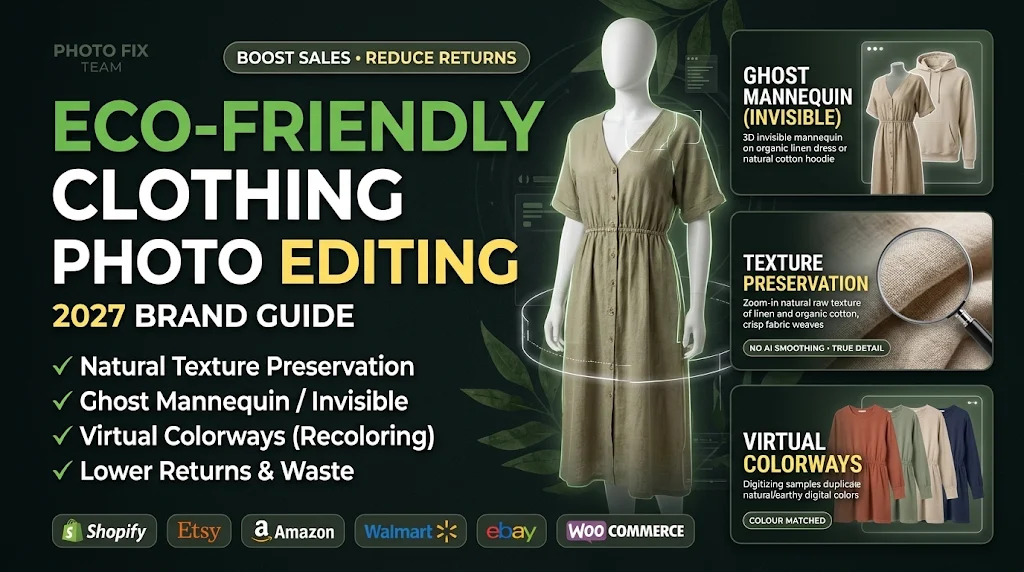
For sustainable apparel brands, eco-friendly clothing photo editing is not about making garments look artificially airbrushed—it is about showing natural fibers, earthy dyes, and real drape with total honesty so shoppers buy with confidence and keep what they order.
Online apparel faces the highest return rate in ecommerce. According to Coresight Research return data compiled by Sizely, 24.4% of US online apparel orders are returned, with size and fit driving 53% of returns and color mismatch accounting for 16%. Even more telling, Salsify’s 2026 Consumer Research reported by WISEPIM found that 45% of shoppers have returned an online purchase due to inaccurate or misleading product presentation. For an eco-friendly fashion brand, every preventable return doubles shipping emissions, wastes packaging, and undermines your core sustainability promise.
This 2027 guide explains how sustainable clothing brands can combine authentic studio presentation with precision Apparel Photo Editing Services to preserve organic fabric textures, reduce physical sample waste, lower returns, and meet strict marketplace image rules across Shopify, Etsy, Amazon, and beyond.
Why Sustainable Fashion Requires a Different Photo Editing Approach
Traditional fast-fashion retouching relies on heavy smoothing, boosted saturation, and rigid perfection. Apply those same presets to organic cotton, raw linen, or hemp, and your products immediately look synthetic—triggering shopper skepticism and “not as described” returns.
Effective eco-friendly clothing photo editing solves four unique challenges faced by sustainable apparel brands:
- Preserving Natural Fabric Character: Organic textiles feature visible weaves, subtle slubs, and matte finishes. Over-retouching wipes away the exact tactile cues that justify a premium eco-friendly price point.
- Accurate Plant-Based & Earthy Color Rendering: Undyed cotton, botanical dyes, sage greens, terracotta, and oatmeal tones shift drastically under uneven studio lighting. Calibrated color correction keeps web previews faithful to real garments.
- Balancing Natural Creases vs. Sloppy Wrinkles: Linen and hemp crease naturally. Good editing removes distracting shipping folds and sharp creases while keeping subtle organic movement so the fabric still looks real.
- Building Anti-Greenwashing Trust: Conscious consumers actively inspect zoom shots for stitching quality, fiber density, and honest fit before trusting sustainability claims like GOTS, OEKO-TEX, or Fair Trade.
Fabric-by-Fabric Editing Guide for Eco-Friendly Clothing
Different sustainable materials react differently to camera sensors and post-production tools. Use these targeted retouching standards across your catalog:
| Sustainable Fabric | Key Visual Trait to Protect | Common Editing Mistake | Best Pro Editing Technique |
| Organic Cotton | Soft matte finish & fine knit weave | Over-sharpening or blowing out off-white highlights | Subtle tonal balancing, lint/dust removal, accurate sRGB whites |
| Linen & Flax | Distinct textured weave & natural slubs | Heavy frequency separation that makes linen look like polyester | Selective steam-wrinkle cleanup while preserving weave grain |
| Hemp & Bamboo | Organic drape & subtle sheen (bamboo) | Crushing mid-tone shadows or shifting earthy hues toward gray | Gentle shadow recovery, natural fold smoothing, true-tone white balance |
| Recycled Polyester / Activewear | Clean seams, technical weave & crisp color | Harsh studio glare on smooth synthetic blends | Glare suppression, seam alignment, and clean Clipping Path Service edges |
| Tencel / Lyocell & Vegan Leather | Fluid drape or subtle grain texture | Flat, lifeless lighting or plastic-looking specular hotspots | Soft highlight control and realistic Shadow / Reflection Editing |
5 High-Impact Photo Editing Workflows for Sustainable Apparel Brands
Modern eco-friendly clothing photo editing does more than polish individual listings—it helps sustainable brands cut production waste while raising conversion rates.
1. Digital Recoloring to Cut Physical Sample Waste
Many eco-friendly clothing brands produce garments in 6 to 12 earthy colorways. Shooting every color variant physically requires extra pre-production samples, air freight, studio days, and wasted textiles. By photographing one master garment and using precision digital color-matching from physical fabric swatches, retouchers generate accurate multi-color SKU galleries—saving fabric, shipping emissions, and studio costs without sacrificing realism.
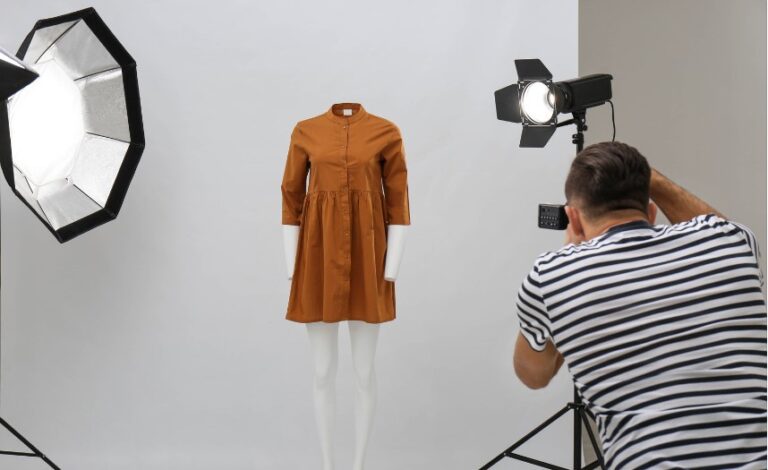
2. Ghost Mannequin Editing for Clear Fit & Drape
Flat-lay photos often hide how a sustainable linen dress or organic hoodie actually drapes on the body. Professional Ghost Mannequin Service (invisible mannequin / 3D neck-joint editing) combines front and interior shots so shoppers see true neckline structure, sleeve volume, and garment shape—directly reducing fit-related returns.
3. True-to-Life Earthy Color Correction
Unbalanced mixed lighting turns warm ecru into dingy yellow or shifts muted sage into bright neon green. Standardizing white balance across every SKU and exporting in sRGB ensures that what shoppers see on their smartphone matches the garment they unbox.
4. Natural Wrinkle Softening & Lint Cleanup
Raw organic garments pick up loose threads, lint, and transit folds quickly on set. Instead of blurring the entire fabric surface, skilled retouchers manually clean stray fibers, remove distracting pin marks, and soften harsh shipping creases while keeping the natural textile texture 100% intact.
5. Consistent Backgrounds That Match Your Brand Ethos
Clean presentation does not have to mean sterile hospital white—unless a marketplace requires it. Whether your storefront uses warm off-white (#F7F5F0), soft neutral stone, or crisp pure white, consistent Background Removal Service and delicate natural cast shadows give your collection grids an elevated, trustworthy look.
Marketplace Image Standards for Eco-Friendly Clothing Brands
Sustainable fashion brands rarely sell on just one channel. Most combine a flagship DTC storefront with curated marketplaces—and each channel enforces different technical requirements. Aligning your visuals with dedicated Photo Editing for Ecommerce Platforms prevents listing suppressions and keeps your brand cohesive everywhere:
| Platform | Ideal Look for Eco-Friendly Clothing | Technical Specs | Dedicated Service |
| Shopify | Cohesive branded neutrals (warm off-white/stone) + natural lifestyle hover shots | 2,048 × 2,048 px (1:1) or 2,048 × 2,560 px (4:5), lightweight WebP/JPEG | Shopify Product Image Editing |
| Etsy | Warm, sunlit, handmade authenticity with distraction-free backgrounds | Min. 2,000 px shortest side; context-rich first thumbnail | Etsy Photo Editing Services |
| Amazon | Strict pure white (RGB 255,255,255) main shot + eco-certification A+ infographics | 1,500–2,000+ px square for zoom, 85%+ frame fill, zero overlays on main image | Amazon Photo Editing Services |
| Walmart | Policy-safe pure white main image + clear fabric/care secondary slides | 2,000 × 2,000 px zoom-ready square, strict batch naming | Walmart Product Image Editing |
| WooCommerce | Brand-matched neutral grids optimized for WordPress Core Web Vitals | 1,000–2,000 px, compressed WebP/JPEG for fast LCP & Google Shopping | WooCommerce Product Image Editing |
| eBay (Circular / Resale) | Crisp, honest multi-angle photos highlighting garment condition & tags | Min. 1,600 px longest side; dust, glare & clutter removed | eBay Listing Photo Editing |
6 Must-Have Images on Every Sustainable Clothing Product Page
To earn buyer trust and minimize returns, build every product detail page around six purposeful visuals:
- Clean Hero Front Shot: Ghost mannequin or model shot on your uniform catalog background showing overall silhouette.
- Back & Side Angle Views: Eliminates uncertainty around hem length, pockets, closures, and drape.
- High-Resolution Fabric Macro Close-Up: 2,048+ px zoom shot revealing organic cotton knit, linen weave, or recycled stitching quality.
- In-Scale Model Fit Shot: Shows natural movement on a real body with model height and size worn clearly noted.
- Interior Detail & Sustainability Tag Shot: Highlights GOTS/OEKO-TEX labels, natural buttons, reinforced seams, or zero-plastic packaging.
- Clean Feature & Care Infographic: Summarizes fiber composition, low-impact washing instructions, and garment measurements in a scannable graphic.
Pre-Publish Checklist for Sustainable Apparel Visuals
Before pushing a new eco-friendly collection live, audit every batch against these seven standards:
- Texture Check: Zoom to 100%—can you still clearly see the organic weave of cotton, linen, or hemp?
- Color Accuracy Check: Compare edited exports side by side with the physical garment under neutral daylight.
- Uniform Margins & Alignment: Ensure every garment fills 80%–85% of the canvas with identical aspect ratios across collection pages.
- Clean Edges & Shadows: Check fine knits, fringe, and collars for clipping halos (use manual Image Masking Service for fuzzy or shearling textures).
- Fast-Loading Web Exports: Export in sRGB at 2,048 px, compressed to ~150–250 KB so mobile pages load fast.
- SEO File Names & Alt Text: Replace
IMG_2091.jpgwithorganic-linen-oatmeal-midi-dress-front.jpgand write descriptive alt text noting fiber, color, and cut. - Marketplace Compliance Audit: Separate pure-white Amazon/Walmart exports from warm branded Shopify/Etsy exports before uploading.
Partner With Specialists Who Understand Sustainable Apparel
Editing natural fabrics requires human judgment—automated one-click filters regularly flatten linen textures, distort plant-dyed earth tones, and leave jagged edges on soft knits.
At Photo Fix Team, our dedicated Ecommerce Photo Editing and Apparel Photo Editing Services help sustainable fashion brands deliver honest, high-converting visuals across Shopify, Etsy, Amazon, Walmart, and WooCommerce—with pricing starting at $0.39 per image, 12–24 hour turnaround, bulk capacity for seasonal drops, and strict NDA privacy.
- View transparent Photo Editing Pricing
- Or Send a Free Test Edit with 1–2 of your organic apparel photos and review our natural texture & color accuracy before placing an order.
Frequently Asked Questions (FAQ)
What makes eco-friendly clothing photo editing different from standard apparel retouching?
Eco-friendly clothing photo editing prioritizes natural fabric authenticity over heavy airbrushing. Editors preserve visible weaves in linen, hemp, and organic cotton, calibrate earthy and botanical dye colors accurately, and soften harsh shipping folds without making the garment look synthetic.
How does accurate photo editing help reduce a fashion brand’s environmental footprint?
Online apparel sees return rates around 24%, with inaccurate visuals and color mismatches driving a major share of avoidable returns. Showing true-to-life colors, macro fabric textures, and clear ghost mannequin fit lowers return rates—cutting double-shipping emissions, packaging waste, and unsellable returned stock.
Can photo editing help sustainable brands create color variants without extra physical samples?
Yes. Through precision digital recoloring matched to physical fabric swatches, brands can photograph one garment sample and produce accurate web images for multiple colorways—reducing physical sample manufacturing, shipping emissions, and studio production waste.
Should eco-friendly clothing brands use pure white or warm neutral backgrounds?
It depends on your sales channel. Amazon and Walmart strictly require pure white (RGB 255,255,255) backgrounds for main listing images, whereas Shopify, Etsy, and WooCommerce brands often convert better using consistent warm off-white, stone, or natural daylight studio backgrounds that match their organic brand aesthetic.
What is the best image size for sustainable clothing product pages?
Export product photos at 2,048 × 2,048 px (1:1) for square grids or 2,048 × 2,560 px (4:5) for fashion portrait grids, in sRGB color space, and compressed around 150–250 KB so shoppers can pinch-to-zoom into fabric weaves without slowing down mobile load speeds.
🚀 Ready to Grow Your eCommerce Business with Professional Clipping Path Services?
Photo Fix Team delivers fast, precise, and affordable clipping path services for eCommerce businesses of all sizes — background removal, white background compliance, ghost mannequin, shadow effects, color correction, and bulk catalog editing with guaranteed quality.
Get a Free Quote Today →